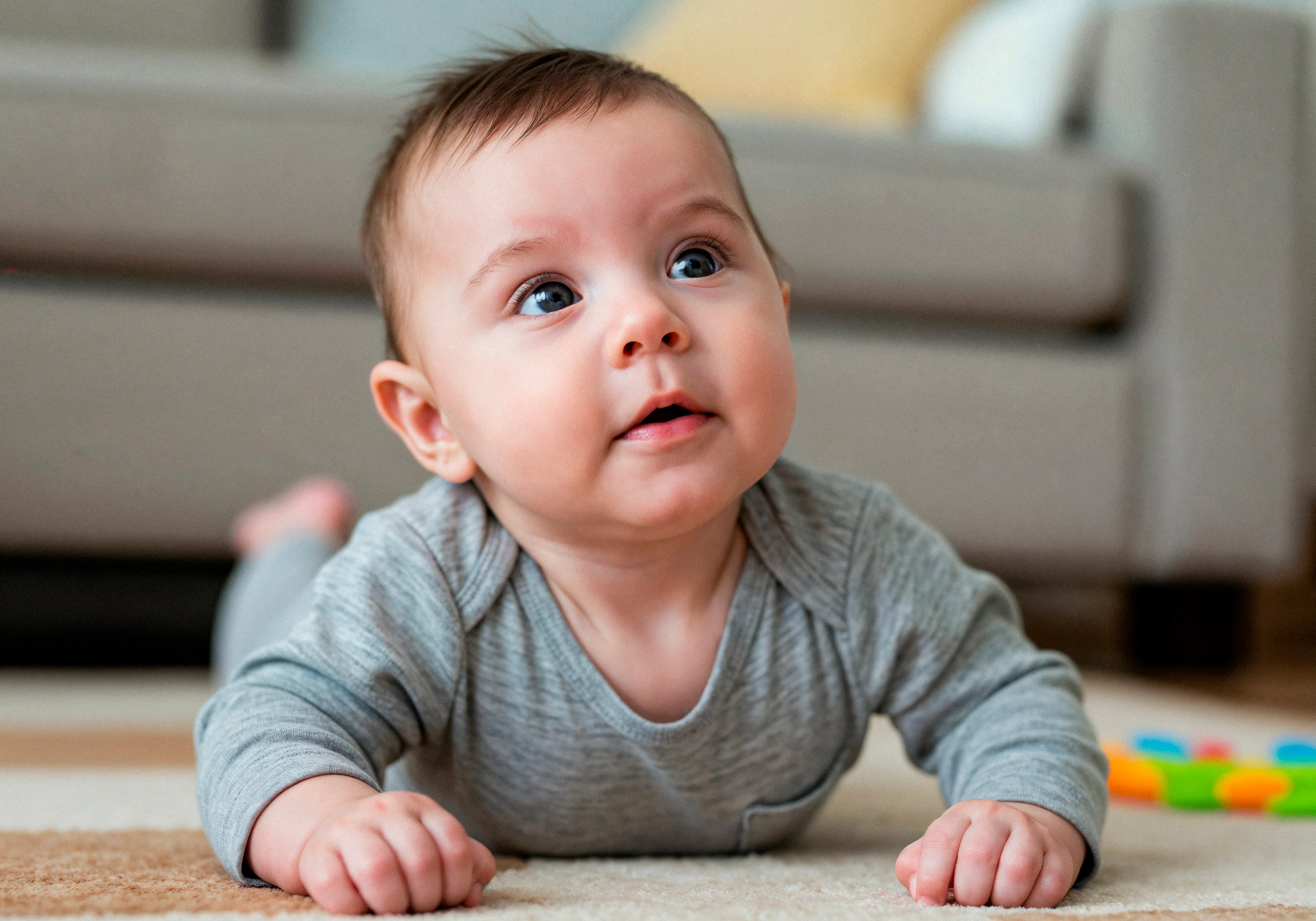
You are in the middle of the night, your toddler is crying again, scratching at their arms and legs, and nothing you do seems to help. You have tried every cream your pediatrician recommended. You have switched bath soaps, changed detergents, and cut out half their diet. And still, the flare-ups keep coming back.
Here is something that took many parents months to figure out: the outfit your toddler wore all day might be the reason they cannot sleep tonight.
Clothing is one of the most overlooked eczema triggers, and once you understand what is actually happening to your child's skin, everything makes a lot more sense.
The Real Problem Nobody Talks About
When parents think about eczema triggers, they usually think about food, dust, or pets. Clothing barely makes the list. But think about it, your toddler is wrapped in fabric every single hour of the day. Whatever is in that fabric is pressed directly against their skin, all day and all night, without a break.
Most mass-market toddler clothing goes through a long manufacturing process before it reaches the store shelf. It gets dyed, treated, softened, and finished with various chemical agents. Some of these chemicals are meant to prevent shrinking. Others are there to make the color pop or keep the fabric wrinkle-free. None of them were designed with your eczema-prone toddler in mind.
The result is clothing that looks perfectly fine, feels soft in your hands, but quietly irritates your child's compromised skin barrier all day long.
Why Toddlers Are More Vulnerable Than Older Kids
A toddler's skin is fundamentally different from adult skin. It is thinner, loses moisture faster, and absorbs whatever it comes into contact with much more readily. For a child with eczema, the skin barrier is already weakened, so irritants do not need to work very hard to penetrate and cause a reaction.
This is also why something that seems minor to you, a slightly scratchy collar, a snug waistband, can send your toddler into a full scratching spiral within an hour of getting dressed.
What Is Actually Hurting Your Toddler's Skin
The Fabric Itself
Synthetic materials like polyester and nylon might feel smooth in the store, but they do not breathe. Your toddler sweats a lot, and when that sweat has nowhere to go, it sits against the skin. That warm, damp environment is exactly where eczema thrives.
Natural fabrics behave completely differently. They allow air to circulate, pull moisture away from the skin, and regulate temperature so your toddler does not overheat. For a child with eczema, this difference is massive.
The Seams and Tags
Run your finger along the inside of most regular children's clothing. You will feel raised seams, stiff tags, and rough stitching. Now imagine that rubbing against already-inflamed, hypersensitive skin every time your toddler moves every step, every crawl, every time they reach for something.
Flat seams, external seams, or seamless construction completely eliminate this problem. It sounds like a small detail until you see how much calmer your child's skin looks after a week in properly constructed clothing.
The Waistbands and Elastic
Tight elastic leaves marks on any child's skin. On a toddler with eczema, that constant pressure and friction can trigger a localized flare right at the waistband. Look for soft, covered elastic or an adjustable waistband that sits comfortably without gripping.
Nighttime Is Its Own Battle
Eczema almost always gets worse at night. Your toddler is still, warm, and pressing against fabric for hours at a time. If the pajamas are not breathable, sweat builds up, skin temperature rises, and the itching starts. Many parents report that fixing the sleepwear situation made a bigger difference than anything else they tried.
The ideal toddler sleepwear for eczema is lightweight, has a relaxed fit, uses the softest fabric possible, and ideally has built-in mittens or fold-over cuffs to prevent scratching during sleep.
The Fabrics That Actually Help
Organic Cotton
This is the most accessible and widely available option. The keyword is organic regular cotton, which is grown with heavy pesticide use and processed with chemicals that can remain in the finished fabric. Organic cotton skips all of that. It is soft, breathable, and gentle enough for even the most reactive skin. If you are just starting out and do not know where to begin, organic cotton is the safest first step.
Bamboo
Bamboo has become a favorite in the eczema community for good reason. It is naturally softer than cotton, excellent at pulling moisture away from the skin, and has inherent antibacterial properties that help keep things calm. It also regulates temperature well, making it a solid choice for both summer and winter.
One thing to watch for is to check the label carefully. Pure bamboo fabric is wonderful, but bamboo blended with spandex or elastane loses most of its benefits and adds a synthetic trigger back into the mix.
TENCEL (Lyocell)
TENCEL is less well-known but deserves far more attention in the eczema world. It is made from wood pulp using a closed-loop production process that uses far fewer harsh chemicals than bamboo viscose. The result is an incredibly smooth, breathable fabric that sits gently on sensitive skin and manages moisture brilliantly. If your toddler reacts to even organic cotton, TENCEL is worth trying.
Superfine Merino Wool
This one surprises most parents. Regular wool is a disaster for eczema scratchy and irritating. But superfine merino wool is a completely different story. The fibers are so fine that they do not prickle the skin, and the temperature-regulating properties of wool keep your toddler comfortable in cold weather without overheating, which triggers flares. For winter dressing, a superfine merino base layer can be genuinely life-changing.
What to Skip Entirely
Polyester and nylon no breathability, no moisture management, full of processing chemicals.
Bright, heavily dyed fabrics the more saturated the color, the more dye was used, and synthetic dyes are a very common eczema irritant. When in doubt, choose muted tones or undyed natural fabrics.
Bamboo viscose blended with spandex spandex is synthetic and frequently irritating. Always read the full fabric breakdown, not just the headline material.
Anything with internal tags this should be a non-negotiable. If a brand has not made the effort to go tagless, they probably have not thought hard enough about sensitive skin.
Dressing for the Seasons
Summer lightweight organic cotton or bamboo in loose, relaxed fits. Change clothes promptly after any outdoor play or sweating. Avoid anything dark-colored that absorbs heat.
Winter start with a TENCEL or superfine merino base layer directly on the skin, then layer over it. Never let synthetic fabrics come into direct contact with the skin, even under a coat. Keep indoor temperatures moderate overheating is just as much of a trigger as cold air.
The Laundry Part Matters Too
You can buy the most perfect eczema-friendly outfit in the world and ruin it at the laundry step. Fragrant detergents, fabric softeners, and biological formulas all leave residue on clothing that presses straight against your toddler's skin.
Use a fragrance-free, dye-free, non-biological detergent. Skip the fabric softener completely it leaves a coating on the fabric that reduces breathability and irritates sensitive skin. Run an extra rinse cycle every time to make sure nothing is left behind.
Wash new clothing before your toddler wears it for the first time, even if it claims to be organic and certified. One extra wash removes any residual manufacturing traces, giving you peace of mind.
A Simple Checklist for Shopping
Before buying anything for your toddler's eczema, run through this quickly:
- Natural fabric organic cotton, bamboo, TENCEL, or superfine merino
- Tagless or external tags only
- Flat seams or seamless construction
- No spandex, elastane, polyester, or nylon in the blend
- OEKO-TEX certified, if possible
- Covered or soft elastic waistbands
- Loose, relaxed fit nothing tight or restrictive
- Muted or undyed color options available
The Honest Truth About Cost
Eczema-friendly clothing costs more. There is no way around it, and any parent who has bought it knows exactly what that first price tag feels like.
But here is the perspective that helped many parents make peace with the cost: think about what one bad flare-up actually costs you. The doctor visit. The prescription. The sleepless nights for your child and for you. The days of discomfort, the skin damage, the time lost. Quality clothing that prevents even a handful of those flare-ups pays for itself faster than you might expect.
You do not need to replace your toddler's entire wardrobe overnight. Start with what touches the skin most: the sleepwear, undergarments, and everyday basics, and build from there.
Final Thought
Nobody tells you when your child is diagnosed with eczema that one day you will be reading fabric labels in a children's clothing store like they are ingredient lists on medication. But here you are, and honestly, that level of attention is exactly what makes the difference.
The right clothing will not cure your toddler's eczema. But the wrong clothing will keep it from getting better. Once you take that variable out of the equation, you give everything else you are doing, the creams, the routines, the diet changes a real chance to actually work.